What Justifies the Price of a Bespoke Suit? A Transparent Breakdown
Where does the money go in a bespoke suit? A line-by-line look at fabric, pattern drafting, hand construction, and atelier overhead at One Tailor.
When clients first see our pricing, with bespoke commissions starting at RM6,000 and rising to RM12,000 or more, the question that follows is fair and predictable. You can buy a passable suit for RM800 in a department store at Mid Valley. So what justifies a number that is many times higher?
I prefer to answer that question with full transparency. After 22 years cutting suits in Petaling Jaya, and 46 years of family history in this trade, my view is that pricing should be explainable in plain numbers. If a tailor cannot tell you where the money goes, you should walk out of the shop.
Here is exactly what goes into a bespoke commission at One Tailor, from the cloth on the bolt to the finishing stitch in our atelier on Lorong PJU3.
A Different Way to Think About Cost
Before the breakdown, one quick framing point. The price of a bespoke suit is not a mystery markup. It is the sum of four very real things: raw materials, intellectual labor, manual labor, and the cost of running a real workshop in a high-rent area like Petaling Jaya. Each one is measurable, and together they explain the entire invoice.
Component 1: The Cloth
The cloth you choose is usually the largest single variable in the final price. Our team sources directly from heritage British and Italian mills like Holland & Sherry, Scabal, and Dormeuil, the same producers that supply Savile Row.
What makes premium cloth different?
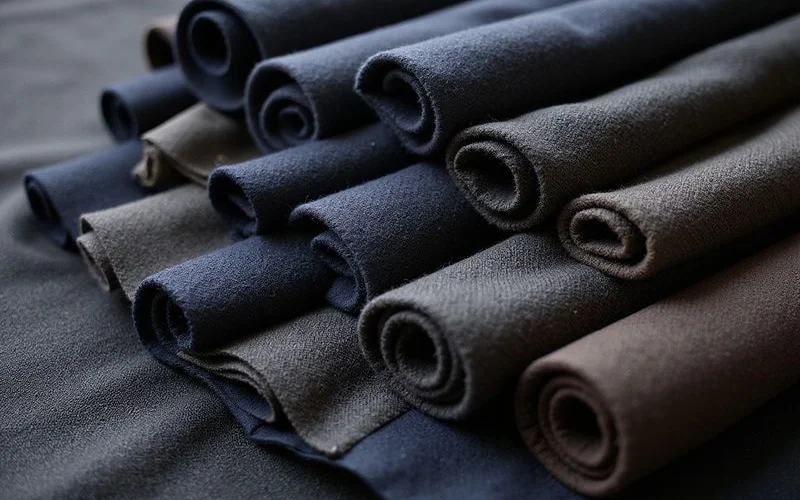
Premium suiting cloth represents wool from specific sheep herds raised in carefully managed conditions, processed using techniques refined over generations to balance durability and hand feel. The result is a cloth that drapes naturally, recovers its shape after a long day, and survives Petaling Jaya humidity without losing structure.
For most daily business wear, we recommend a sturdy Super 110s or 120s wool. Higher numbers like Super 150s or 180s feel incredibly soft, but they are more fragile and prone to wrinkling, which makes them poor choices for the LDP commute.
Cloth costs rise substantially as you move into finer weaves, cashmere blends, or limited-run mill collections. At One Tailor, the cloth typically accounts for 15% to 25% of the total commission price.
Component 2: The Pattern (Where Decades of Knowledge Live)
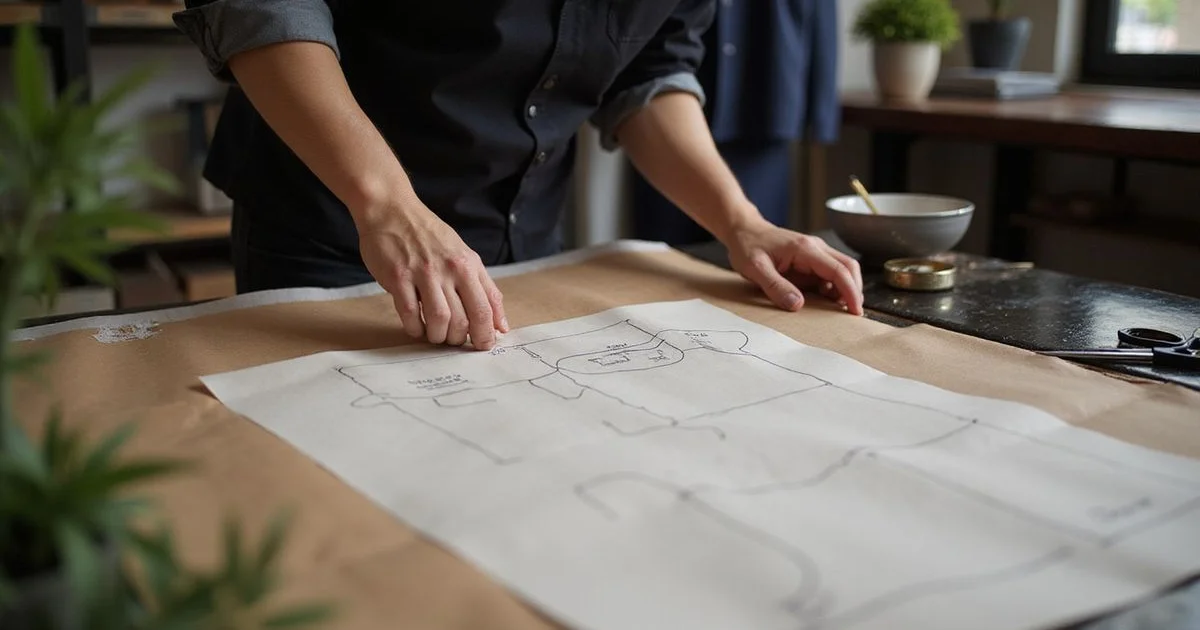
Every bespoke commission begins with a paper pattern drafted specifically for your body. This is not a computer template adjusted slightly. It is a fresh design drawn from a blank sheet using techniques I learned at the Savile Row Academy and refined over two decades of fittings here in Selangor.
Creating this blueprint requires understanding anatomy, physics, and human posture as much as raw measurements. Why does your right shoulder sit slightly lower than your left? How does long-distance commuting on the LDP and Federal Highway affect the way a jacket hangs when you are seated for ninety minutes? Where does the cloth naturally want to pool given your specific body geometry?
We direct the cloth to drape cleanly with your body’s natural lines, rather than fighting against them. This knowledge is built through years of training and thousands of fittings. The drafting process that takes me an hour or two represents decades of accumulated craft. That is intellectual labor, and it is real.
Component 3: Cutting With Care
With the pattern complete, fabric cutting begins, by hand, on our cutting table.
Each piece is cut to follow the paper pattern with specific allowances for seams and future adjustments. Cutting is also about understanding how the cloth’s grain direction will affect the finished garment. We position pattern pieces to use the cloth efficiently while ensuring stripe or check patterns align perfectly across seams.
A mistake at this stage ruins expensive cloth and sets the entire commission back by weeks. Experience prevents costly errors, and that experience is part of what you are paying for.
Component 4: 60 to 80 Hours of Skilled Handwork
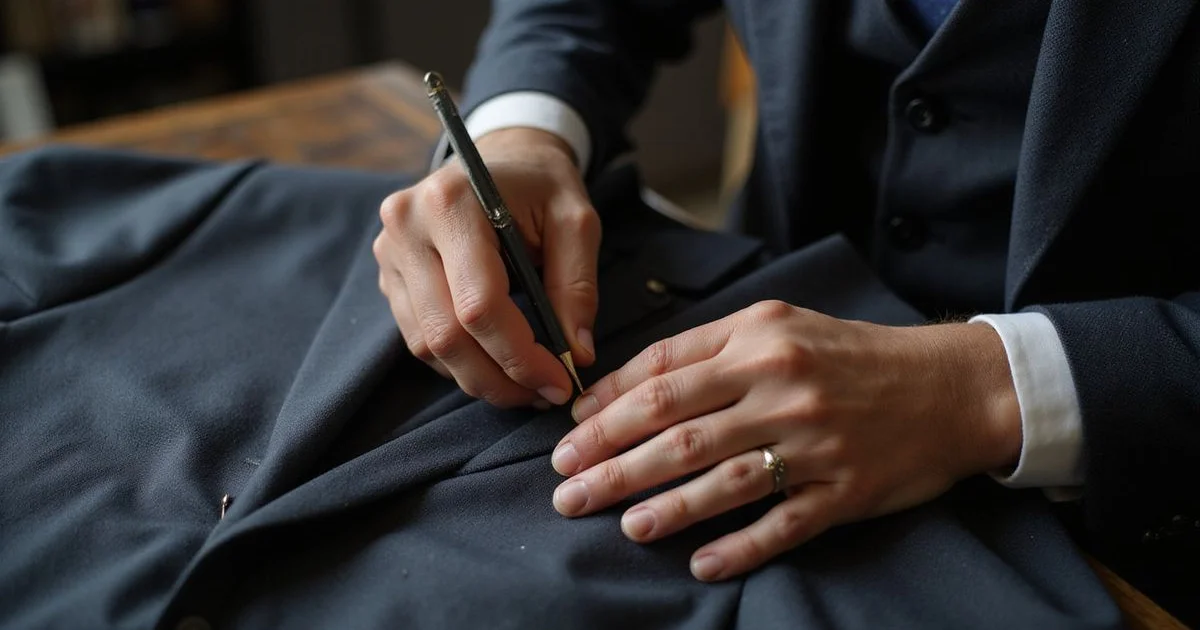
Here is where the most significant labor cost lives. A true bespoke suit absorbs between 60 and 80 hours of skilled handwork, distributed across cutting, canvas padding, sleeve setting, lining attachment, and finishing.
The canvas work alone takes many hours. The internal layer that gives a jacket its shape, the canvas, is hand-padded and stitched to gradually build volume in the chest and lapel. Carmen, our finishing specialist, does this by hand for every commission that leaves our atelier.
This canvas “floats” between the outer cloth and the lining, allowing the jacket to mold to your body over months of wear.
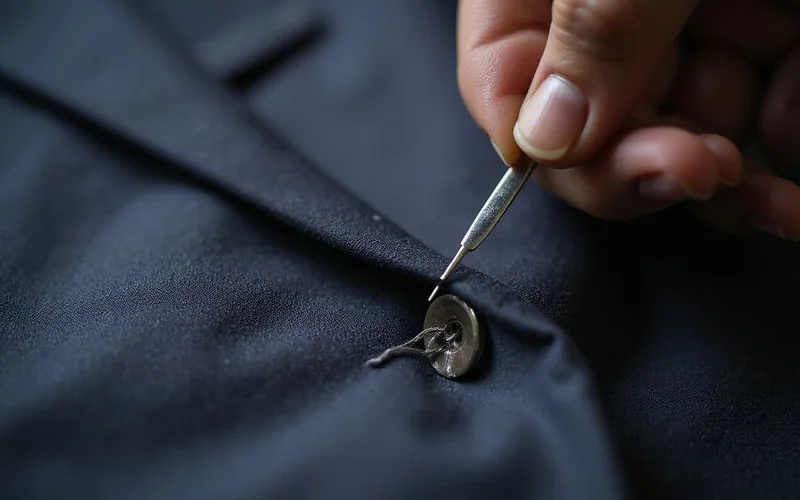
Hand-sewn details define the quality:
- Pick stitching: Tiny visible stitches along the lapel edges that prevent rolling.
- Floating canvas: Thousands of internal stitches that create a flexible, breathable structure.
- Functional buttonholes: Each one cut and sewn by hand using silk thread. A single hand-finished buttonhole takes 20 to 30 minutes to complete properly. Machine versions take seconds but fray and look flat.
Canvas Construction vs Factory Fusing
| Feature | Hand-Canvassed (One Tailor) | Factory Fused Suit |
|---|---|---|
| Internal Structure | Floating canvas of wool and horsehair | Glued synthetic interlining |
| Adaptability | Molds to your body shape over time | Stays stiff and static |
| Breathability | High, air flows through layers | Low, the glue blocks airflow |
| Lifespan in Tropical Climate | 15 to 20+ years with care | 2 to 4 years before bubbling appears |
Component 5: The Multi-Stage Fitting Process
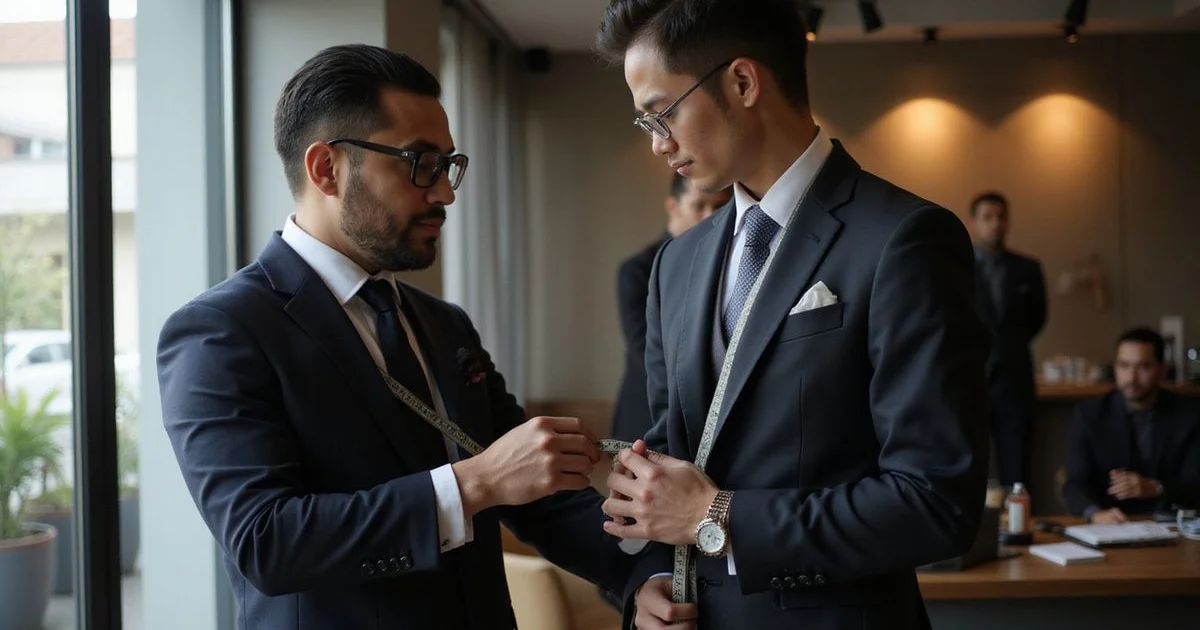
Unlike off-the-rack purchases, our process includes multiple fittings to ensure precision.
- First (basted) fitting: You try on a “basted” version of the suit held together with white thread. We mark where shoulders need adjustment and where the balance needs correction.
- Second fitting: We verify the changes and address any remaining drape or comfort issues.
- Final fitting: One last check before pressing and delivery.
Each fitting represents real time for both you and our team. This rigorous process is the reason a true bespoke commission fits like nothing else can, and it is built into the pricing because shortcuts here defeat the entire purpose.
A Local Insight: The Real Cost of an Atelier in PJ
Behind every suit we make sits the overhead of running a proper tailoring workshop in Petaling Jaya. Property in this part of Selangor is not cheap. We pay rent on our atelier, maintain specialized cutting equipment, and most importantly, we pay our team properly so they can do work properly rather than rushing to meet factory quotas.
Every stitch in a One Tailor suit happens here in PJ. We do not outsource construction overseas to cut costs. That commitment to local, on-site work means we control quality at every stage, and it also means we bear the full cost of doing everything ourselves in a high-cost region.
Many shops in the Klang Valley quietly outsource the actual construction to factories in Vietnam or Thailand, then mark up the result and call it bespoke. We have made the deliberate choice not to. That choice has a cost, and it is reflected in our pricing.
The Contrast: How Mass Production Hits Its Price Point
To understand bespoke pricing, consider what mass production achieves and what it sacrifices. A factory suit might use RM150 to RM300 worth of cloth, with cutting and construction taking just 2 to 3 hours of lower-wage labor. Fused canvas replaces hours of hand-padding. Machine buttonholes take seconds.
The result is a functional garment at a fraction of the price. It is also fundamentally a different product, made for an “average” body that does not exist, using techniques optimized for speed rather than longevity.
When you commission from us, you are not paying for a fancy label. You are paying for a garment designed for one body and one climate.
The Value Proposition
A RM7,000 bespoke commission can seem expensive next to an RM1,500 off-the-rack suit. Look at the cost per wear and the math shifts.
Longevity is the key. A well-made suit, properly cared for, lasts 15 to 20 years or longer. We have clients in Bandar Utama still wearing suits we cut for them more than a decade ago. A RM7,000 suit worn over 15 years is roughly RM467 per year, or under RM2 per wear if you wear it weekly.
Fit provides confidence. No off-the-rack suit will ever fit like one made specifically for you.
Alterability extends the garment’s useful life. Our suits come with generous seam allowances and quality materials, so they can be re-cut as your body changes. Most factory suits cannot survive significant alterations.
Satisfaction is the intangible benefit. There is something deeply satisfying about owning a garment made by skilled hands specifically for you, in your own city, by people you know by name.
Our Commitment to Transparent Pricing
At One Tailor, our bespoke suits start at RM6,000 and reach up to RM12,000 depending on cloth selection. Every commission includes all consultations, pattern drafting, multiple fittings, and any adjustments needed for a perfect fit. There are no hidden costs at the end.
If you have never experienced this level of tailoring, I would welcome the chance to show you what is possible. Begin with a complimentary consultation where we can discuss your needs, walk through cloth options together, and answer any questions about the process.
The investment is real. So is what you get back across the next two decades of your wardrobe.
James Wong
Third-generation master tailor with Savile Row training. James brings decades of bespoke craftsmanship to every garment.