Bespoke vs Made-to-Measure: A Petaling Jaya Buyer's Breakdown
Confused by the terms used in PJ tailor shops? Here is the honest difference between bespoke and made-to-measure, from construction to lifetime value.
Ask any executive walking through Damansara Uptown what they paid for their last suit, and you will hear three different stories with three different definitions of “custom.” Some paid RM800 for a made-to-measure shirt and a single fitting. Others spent RM6,000 and waited three months for a fully drafted commission. Both were marketed as personalized.
That confusion is not your fault. The Klang Valley tailoring scene runs the full gamut from quick alteration kiosks to true bespoke ateliers, and many shops blur the lines on purpose. After 46 years on this street, we have seen plenty of clients walk in disappointed because the “custom” suit they bought elsewhere was really a modified template.
So let us cut through the marketing language and look at what actually separates these two methods.
What Petaling Jaya Buyers Should Know First
Here in Petaling Jaya, the climate adds a layer of complexity that most buyers do not consider. A suit that performs well in a London showroom might feel like a sauna by the time you walk from your car park to your meeting in Bandar Utama. The construction method matters more here than almost anywhere else, because tropical heat and 80% humidity expose every shortcut a tailor takes.
That is the local angle to keep in mind as we compare these two approaches.
Made-to-Measure: Adjusting a Pre-Built Template
Made-to-measure (MTM) starts with a “block pattern,” which is a standardized template designed for a hypothetical average body. The shop takes your measurements, then modifies that template within preset limits.
Picture a developer building a row of terraced houses in Section 13. The footprint is fixed, the foundations are poured, but you can choose the kitchen layout and pick the tiles. That is MTM in essence.
Where MTM Hits Its Ceiling
Most modern MTM relies on CAD software that stretches and shrinks a digital pattern. Efficient, yes, but the limits are real.
- The tolerance window: If your right shoulder drops more than the system’s preset (often around 2 cm), the software cannot fully compensate.
- Symmetry assumptions: These programs treat your body as a mirror image, which almost no one actually is.
- 2D thinking: The system reads length and width but rarely captures the 3D geometry of your back, chest curve, or seat.
For many gentlemen with a fairly standard build, MTM is a genuine upgrade over off-the-rack and lands at a friendlier price point. A well-made MTM suit in Petaling Jaya typically runs RM2,500 to RM5,500, depending on cloth.
But if you have spent fifteen years hunched over a laptop in a Mutiara Damansara office and developed a forward-leaning posture, MTM adjustments rarely close the collar gap behind your neck.
True Bespoke: Drafted From a Blank Sheet
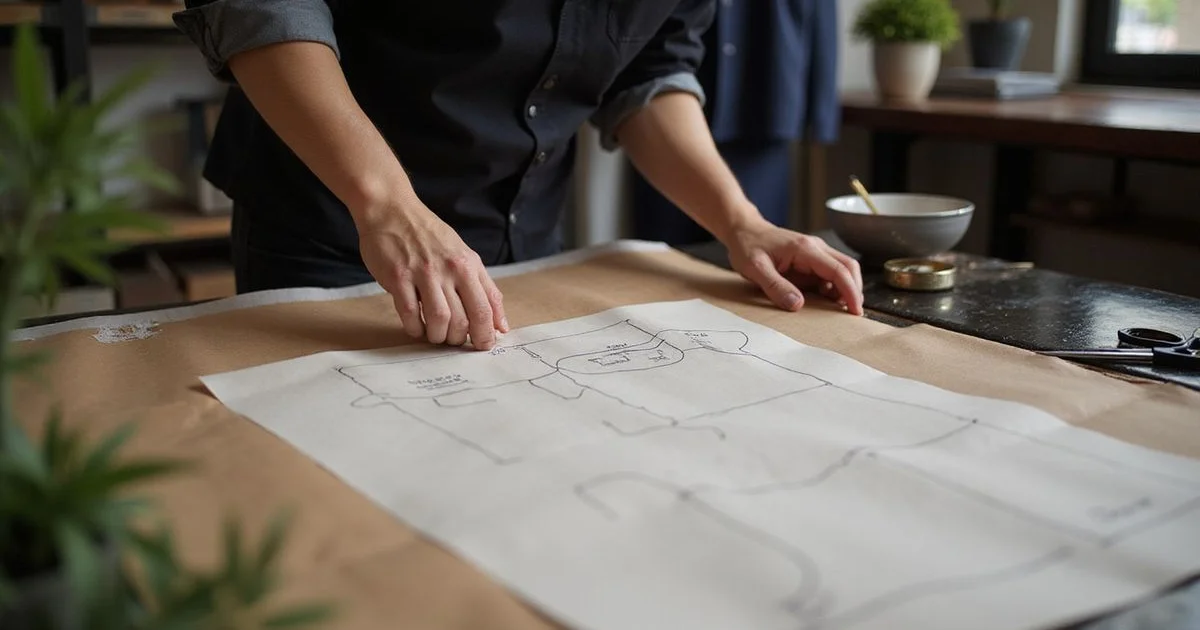
True custom tailoring takes a fundamentally different engineering approach. Instead of editing an existing file, our cutter draws a fresh paper pattern from scratch, calibrated to one human being.
This method combines more than 30 precise measurements with what old-school tailors call “rock of eye,” the trained ability to read the geometry of a body and translate it into shapes on paper.
Structural Nuances We Can Address
We recommend this route when a client has features that no standard block can absorb cleanly.
- Shoulder slope: We can build one pad slightly thinner than the other so your silhouette levels invisibly.
- Postural alignment: The pattern accounts for spinal curvature and the natural resting angle of your arms.
- Seat and thigh: We draft the back panels with extra fabric in specific curves, so the rear vent never flares open in a meeting.
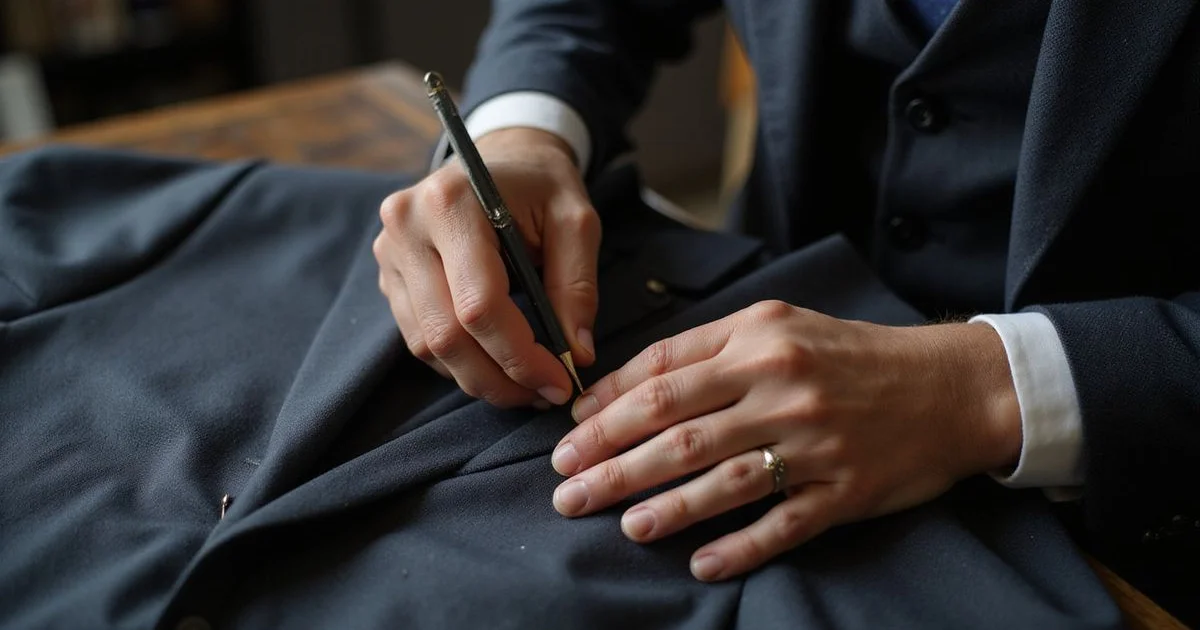
Constructed almost entirely by hand, a single bespoke suit absorbs 60 to 80 hours of skilled work between cutting, canvas padding, and finishing.
The Construction Gap That Matters Most in the Tropics
The internal engineering of the jacket is where the quality gulf widens, and where Klang Valley humidity exposes the difference fastest.
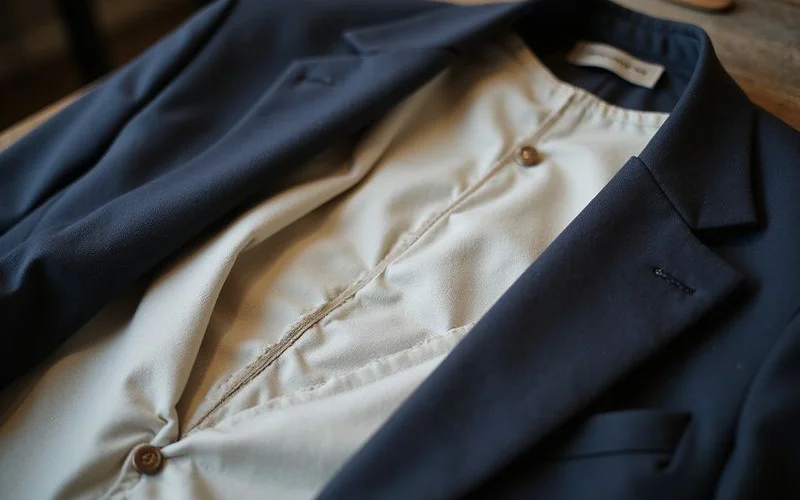
Cheaper made-to-measure jackets are often factory produced with fused interlinings, where heat-activated glue bonds the canvas to the wool. It looks crisp on day one. Then humidity, dry cleaning, and time degrade the adhesive, and the chest begins to bubble like a bad screen protector.
Bespoke commissions almost always use a “full floating canvas,” an internal layer of natural horsehair and camel hair stitched in by hand.
Why Hand-Padding Earns Its Cost in Selangor
- Moldability: The canvas floats between layers and slowly molds to your chest with body heat. After a year, the suit feels personally yours.
- Breathability: Without a sheet of glue blocking airflow, the jacket regulates temperature, which is no small thing when you are stuck on the LDP at 6 pm.
- Durability: A hand-finished lapel develops a natural roll that machine pressing cannot fake.
The Fitting Process: One Visit vs a Series
The journey from order to delivery looks very different.
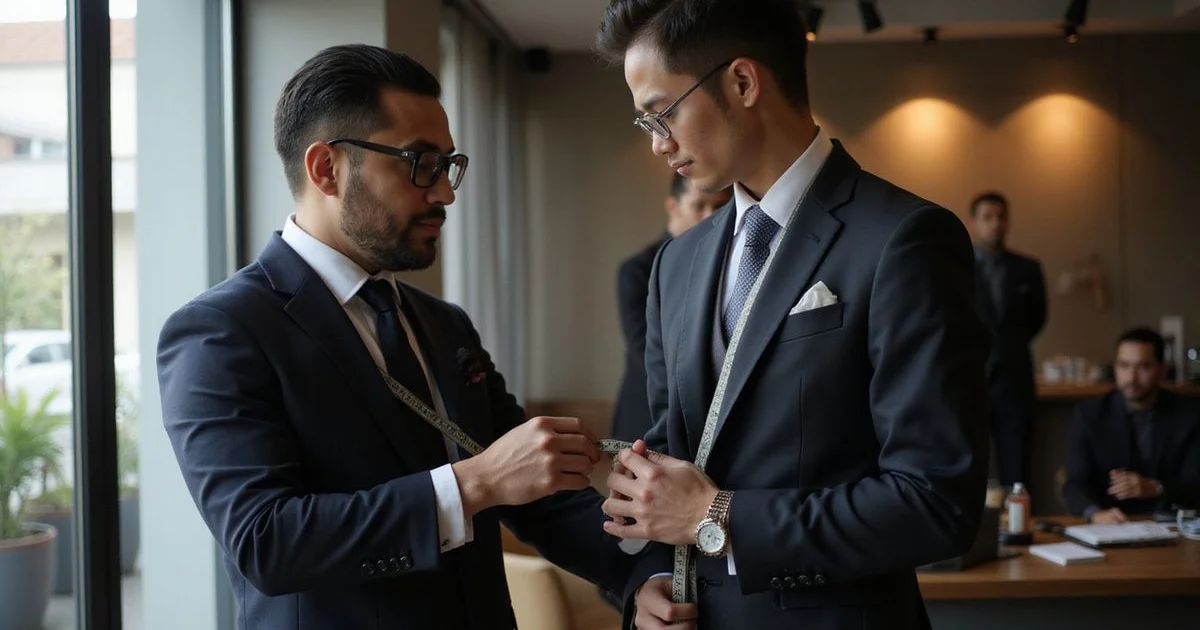
MTM usually involves a single measurement session. Your data is entered, the suit is produced offshore or in a small workshop, and you collect the finished garment a few weeks later.
Bespoke unfolds in stages. We hold a series of “baste” fittings that let us sculpt the cloth on your body before any finishing happens.
- Skeleton baste: You try on a rough version of the jacket, held together with white basting thread. We correct the balance and drape before the expensive cloth is committed.
- Forward fitting: The actual fabric is sewn together but the structure is still accessible for fine adjustment.
- Finishing check: A final review on the button stance, hem lengths, and overall proportions against your shoes and shirt cuffs.
Quick Comparison: By the Numbers
| Feature | Made-to-Measure (MTM) | True Bespoke |
|---|---|---|
| Foundation | Standard block pattern | Unique paper pattern |
| Average Timeframe | 3 to 6 weeks | 8 to 12 weeks |
| Fittings | 1 (plus a final tweak) | 3 or more (basted stages) |
| Typical Cost (PJ) | RM2,500 to RM5,500 | RM6,000 to RM12,000+ |
| Lifespan | 3 to 7 years | 15 to 20+ years |
| Customization | Visual details | Structural and visual |
When MTM Is Genuinely the Right Call
Made-to-measure is not inferior. It is a different tool for a different brief.
Consider MTM if:
- Your weight has been shifting and a long-term commission feels risky.
- You need a sharp suit for a wedding at Le Méridien PJ in less than a month.
- You are building the foundation of your work wardrobe and you would rather have three solid suits than one masterpiece.
A well-cut MTM suit on a quality Italian cloth still beats most things you will find in a department store.
When Bespoke Earns Its Premium
True bespoke makes sense when you treat clothing as a long-horizon asset.
- Cost per wear: A RM8,000 suit worn 200 times costs RM40 per wear. A RM1,500 fused suit that loses its shape inside two years costs roughly the same per wear, but looks worse with every outing.
- Hard-to-fit physiques: Athletic legs, broad shoulders, asymmetry, or a strong drop are all reasons a paper pattern outperforms a template.
- Professional presence: For senior leaders pitching investors in Damansara Uptown, the psychological boost of a garment that fits seamlessly is genuinely measurable.
A Note on the Word “Custom”
Many shops in PJ have co-opted prestige terms for marketing. Walk past Empire Damansara on a Saturday and you will see signs promising “tailor-made” suits ready in seven days, with no basting stage and no canvas in sight.
That is fine, provided you know what you are paying for. Genuine Savile Row standard tailoring requires:
- A pattern drafted for one individual.
- Hand-cut cloth.
- A floating canvas.
- Multiple basted fittings.
If a brand promises a “bespoke” suit in two weeks without a basted stage, you are buying made-to-measure.
Making Your Choice
The right answer depends on your timeline, budget, and physical needs. At One Tailor, we focus on bespoke suits because we believe Petaling Jaya executives deserve a garment built for one body and one climate. When a jacket is engineered specifically for your shoulders and your weather, the difference in confidence is immediate.
If you would like to compare both methods in person, book a consultation. We will walk you through fabrics from Holland & Sherry and Dormeuil, show you the canvas construction firsthand, and help you decide which path actually fits your wardrobe goals.
James Wong
Third-generation master tailor with Savile Row training. James brings decades of bespoke craftsmanship to every garment.