Dress Shirt Collar Styles: A Practical Guide for Working Professionals
From spread to button-down, here is how to choose the right dress shirt collar for your face shape, tie size, and how you actually dress for work.
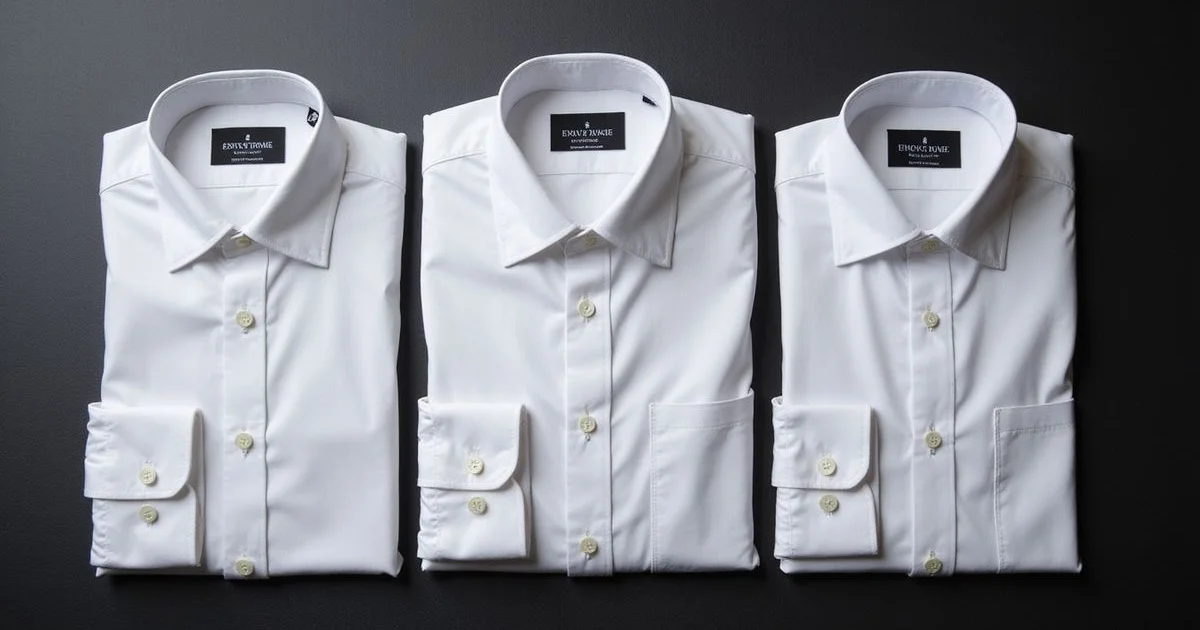
The collar is the most visible part of any dress shirt. It frames your face on a Zoom call, anchors your tie at a board meeting, and decides whether your jacket lapel sits cleanly or fights you all day. Yet most clients we meet at our Petaling Jaya atelier admit they have never thought about it. They simply wore whatever came on the rack at a department store.
That oversight is one of the easiest things to fix. A sharp suit and a beautiful tie can be undermined entirely by a collar that does not fit a wearer’s face shape, tie size, or daily wardrobe.
This guide is the same one we hand to clients during a consultation at One Tailor. It is not exhaustive, but it covers everything a working professional in the Klang Valley actually needs to know.
How Collar Choice Translates to Real Office Life
Before we go into specific styles, it helps to think about your actual day. A barrister appearing in court at the PJ legal complex needs a different collar from a creative director at a Damansara Uptown agency. Climate matters too, because lower-stance collars sit cooler against the neck during a Selangor afternoon when the air-conditioning is fighting a losing battle.
Think about three things as you read on:
- The shape of your face (round, long, square, heart).
- The tie knot you reach for most often.
- How formal or relaxed your weekly wardrobe really is.
The Spread Collar
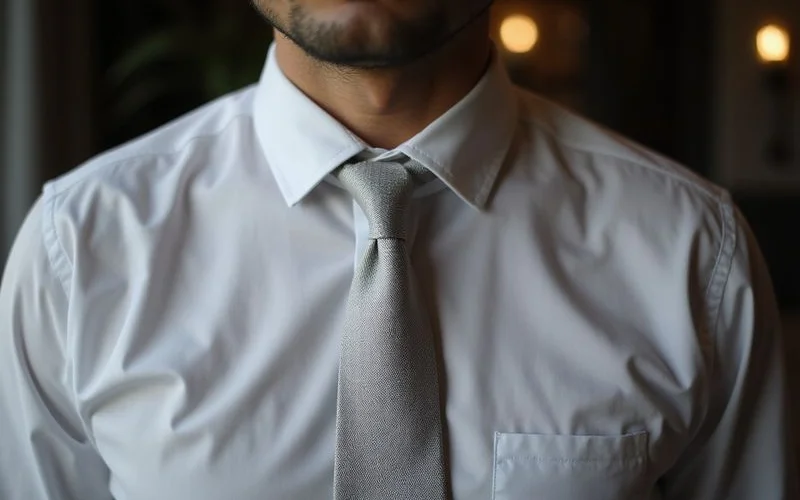
The spread collar features points that angle outward, opening a wide V at the base of the neck. This is the most dominant style in modern business wear, particularly in European and Asian corporate centers.
Technically, the “spread” describes the angle between the points, usually somewhere between 90 and 120 degrees. That width has a real mechanical purpose, not just an aesthetic one.
Best for:
- Narrow or long faces, where horizontal lines visually balance vertical features.
- Heavier necktie fabrics (wool, cashmere, silk knit) that need extra room.
- Full Windsor or double knots that demand space to sit properly.
- Confident corporate dressing in finance, law, and senior management.
Watch out for:
- Small, thin tie knots, which look orphaned in the wide opening.
- Short collar points that fail to tuck under your jacket lapel cleanly.
The Point Collar
The point collar features straight, elongated points angling downward toward the chest, with a spread of less than 60 degrees. It is the classic American business standard and remains a staple of conservative legal and government environments.
We often recommend this style to clients who want a traditional, no-nonsense look that focuses attention straight at the face. The vertical orientation pulls the eye down rather than across.
Best for:
- Round or wide faces, where vertical lines slim the proportions.
- Smaller knots like the Four-in-Hand or Prince Albert.
- Traditional industries that reward sartorial restraint.
- Clients who want collar points that stay reliably under a jacket lapel.
Watch out for:
- Soft, unstayed points that curl up by mid-afternoon.
- Large knots that push the points off the shirt body.
The Semi-Spread Collar
The semi-spread sits between the point and full spread, with about 10 cm between the points. We consider this the safest middle ground for a capsule wardrobe. It accommodates most knots and flatters most face shapes.
Best for:
- Daily rotation across different work settings.
- Anyone unsure whether their face is “round” or “long.”
- Half-Windsor knots, which fill the gap perfectly.
Watch out for:
- It is safe by design, which means it rarely makes a strong statement.
The Cutaway Collar
The cutaway, sometimes called the extreme spread, angles the points sharply away from the neck, sometimes approaching a horizontal line. It is a bold choice that has surged in popularity among style-conscious professionals in PJ over the past few years.
Best for:
- Making a strong style statement in fashion-aware industries.
- Wide, substantial tie knots that can fill the opening.
- Wear without a tie, since the points sit cleanly on either side of the neck.
Watch out for:
- Conservative interview environments, where it can read as flashy.
- Short points that may not reach the jacket lapel.
The Button-Down Collar
The button-down collar fastens the points to the shirt body with two small buttons. It was introduced by Brooks Brothers in 1896 to keep polo players’ collars from flapping in the wind, and the soft “roll” of a high-quality button-down is one of the most quietly elegant details in menswear.

Best for:
- Business casual offices, where ties are optional.
- Textured cloths like Oxford and chambray.
- Layering under a knit or unstructured jacket.
- Tropical climates, since the soft construction breathes well in PJ humidity.
Watch out for:
- Formal events. Traditionally, button-downs do not pair with double-breasted suits or evening wear.
- Large knots, which look bulky inside a soft button-down.
The Club Collar and the Tab Collar
Two heritage styles deserve a brief mention.
The club collar features rounded points instead of angular ones, originating at Eton College in the 1850s. It shows up periodically thanks to films and television and works beautifully with tweed, vests, and vintage tailoring. It softens an angular jaw and pairs naturally with a collar pin.
The tab collar has a small fabric tab connecting the points behind the tie, forcing the knot forward into a clean architectural arch. James Bond wore this style in Skyfall and No Time To Die, and many of our clients ask about it after rewatching the films. It only works with a tie, and you cannot wear it open-collar at all.
A Local Insight: Choose Collar Height for the Tropics
Here is something we discuss with almost every shirt commission at One Tailor. The collar band height (the strip of fabric the collar sits on top of) matters as much as the point style, especially in our climate.
- Tall collars (4 to 5 cm): Formal and commanding. Best for taller necks and high-stakes meetings, but they trap heat in the Selangor afternoon.
- Standard collars (3.5 to 4 cm): A safe everyday choice that balances structure with comfort.
- Lower collars (2.5 to 3 cm): More relaxed and modern. They feel cooler against the neck, which is no small thing when you are stuck in LDP traffic in a wool suit.
Petaling Jaya clients almost always benefit from lower or standard collar heights, simply because comfort affects how often you actually wear a shirt.
Matching Collar to Face Shape
Personal style is the ultimate filter, but geometry is a useful starting point.
| Face Shape | Recommended Collar | Why It Works |
|---|---|---|
| Round | Point Collar | Vertical lines elongate the face. |
| Long / Oval | Spread or Cutaway | Horizontal lines widen and balance length. |
| Square | Club or Semi-Spread | Rounded or moderate styles soften an angular jaw. |
| Heart | Semi-Spread | Balances a wider forehead without emphasizing the chin. |
| Diamond | Spread or Cutaway | Widens the jaw to match the cheekbones. |
Matching Collar to Knot
The size of the collar opening should correspond to the physical size of your usual tie knot. A mismatch creates awkward gaps or fabric bunching.
- Large knots (Full Windsor): Spread or Cutaway.
- Medium knots (Half-Windsor): Spread or Semi-Spread.
- Small knots (Four-in-Hand): Point or Button-Down.
The Custom Advantage
Off-the-rack shirts are designed for the average man, which means they fit no specific man perfectly. Custom shirts at One Tailor let you control the variables that matter most: exact point length, collar band height, spread angle, and neck circumference to the quarter centimeter.
If you would like to test different collar styles in person against your face and wardrobe, book a consultation. Daniel and our style team will lay out swatches and collar samples and help you build a shirt that earns its place in your daily rotation.
Daniel Tan
Expert insights from the One Tailor tailoring team in Petaling Jaya.