The Dress Shirt Fit Checklist Every Man Should Memorize
A practical, top-to-bottom checklist for diagnosing dress shirt fit. Learn how the collar, body, sleeves, and cuffs should actually sit on your frame.
A dress shirt is the garment most working men wear most often, yet it is the one we see fitted worst. A shirt that does not sit right undermines everything you put over it. The sharpest blazer cannot rescue a billowing torso, and the most expensive watch loses its impact when the cuff swallows it.
If you have ever caught your reflection in a glass lobby in Bandar Utama and noticed cloth ballooning around your waist, you already know the feeling. You assumed a sloppy fit was just the price of being comfortable. From what we see at our Petaling Jaya atelier every week, that assumption costs men years of confidence they did not need to lose.
This article is not a deep history lesson. It is a working checklist, broken down by zone, that you can run through the next time you stand in front of a mirror.
Zone 1: The Collar
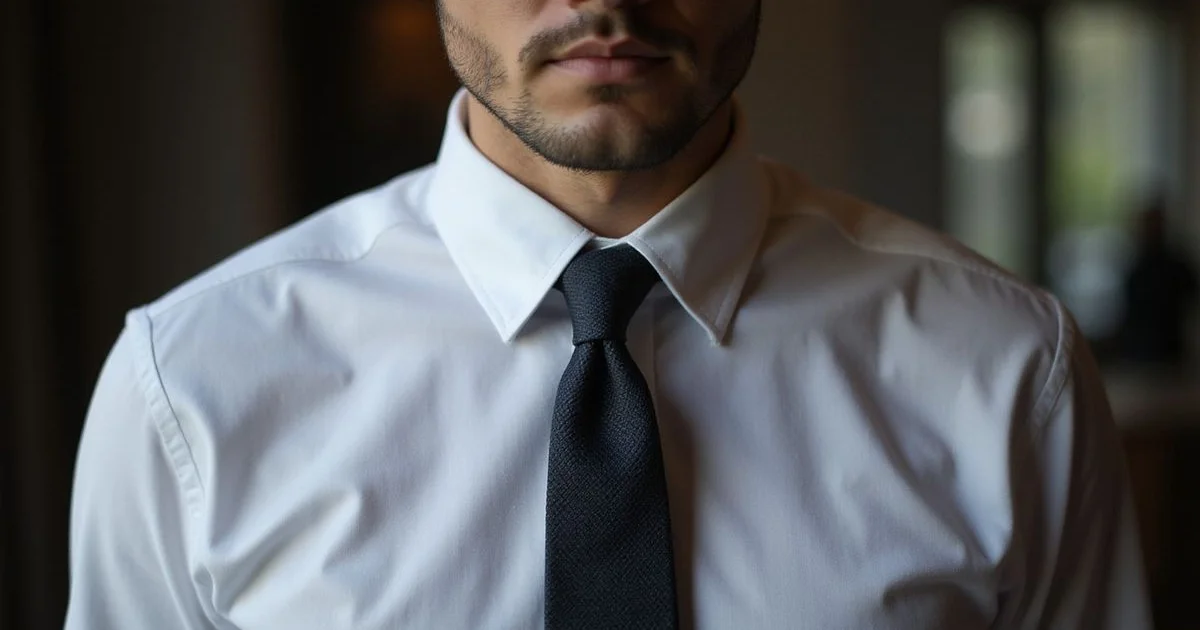
Your shirt collar is on permanent display. It frames your face, holds your tie, and bridges the gap between shirt and jacket.
We pay close attention to the collar because errors here are immediately visible. A study from Cornell once found that 67% of men wear shirts with neck sizes that are too small. Beyond looking pinched, tight collars have been linked to headaches and increased intraocular pressure, neither of which helps you close a deal.
- Neck circumference: With the collar buttoned, you should comfortably slide two fingers between your neck and the band. One finger means strangled by midday. Three means visible gapping.
- Construction quality: Look for a soft, lightly fused or unfused collar that resists “bacon collar” bubbling. Cheap fusing fails fast in PJ humidity.
- Collar height: Tall enough that your jacket collar rests against it cleanly, with about 1 cm of shirt collar visible all the way around.
- Collar points: They should lie flat against the shirt body and stay there. Curling tips signal poor construction or the wrong style for your build.
Zone 2: The Shoulders
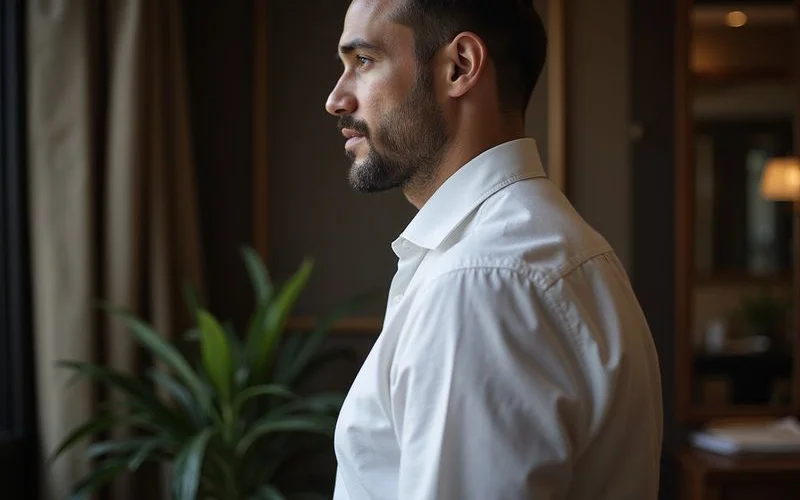
Just like a suit jacket, the yoke seam should sit at the point where your shoulder meets your arm, right at the edge of the shoulder bone.
Most off-the-rack shirts get this wrong by extending the seam down the arm to accommodate broader frames. If the seam sits below your shoulder bone, the shirt is too large. If it climbs onto your shoulder cap, it is too small and will restrict movement when you reach.
The Split Yoke Advantage
Look at the panel of fabric across the upper back. A “split yoke” is made of two pieces cut at an angle, allowing more stretch and a better range of motion than a single panel. We use split yokes on every custom shirt at One Tailor because they accommodate the natural asymmetry of human shoulders.
Zone 3: The Body
The body of a dress shirt should follow your torso without clinging or billowing.
The technical word for “extra fabric” is ease. Most “Classic Fit” shirts have 15 to 20 cm of ease through the chest, which creates that tent effect. We typically aim for 7 to 10 cm for a clean, professional silhouette.
| Fit Type | Chest Ease | Best For |
|---|---|---|
| Slim Fit | 7 to 10 cm | Athletic builds, modern professional look |
| Classic Fit | 12 to 15 cm | Larger builds, comfort-first preference |
| Vintage / Standard | 18 to 23 cm | Rarely flattering; creates excess fabric |
A few real-world tests:
- Tucked in: Minimal excess fabric around your waistband. You should not be tucking handfuls of cloth into your trousers.
- Standing test: Lift your arms above your head. The shirt should stay tucked. If it pulls free, the body is too short or the armholes are too low.
- Sitting test: Sit down and check the placket. If buttons are straining, the body is too tight. If fabric pools in your lap, the body is too full.
Zone 4: The Chest and Waist
Beyond overall body fit, look at the chest and waist independently.
- Chest: With your arms relaxed, fabric across the chest should lie flat. No X-shaped creases at the buttons. No billowing.
- Waist suppression: Better dress shirts taper through the midsection. This prevents the parachute effect at the waistline.
Our finishing team often adds back darts (two vertical seams on the back panel) for clients with an athletic drop, where the chest is broader than the waist. Off-the-rack shirts are usually cut straight from chest to hem, which fits no specific body type well.
Zone 5: The Sleeves
- Length: With your arms hanging naturally, the sleeve should end at your wrist bone, right at the base of your thumb. Show about 1 cm of cuff below your jacket sleeve.
- Shrinkage factor: High-quality cotton shrinks. Account for 1% to 3% shrinkage in sleeve length over the first few washes.
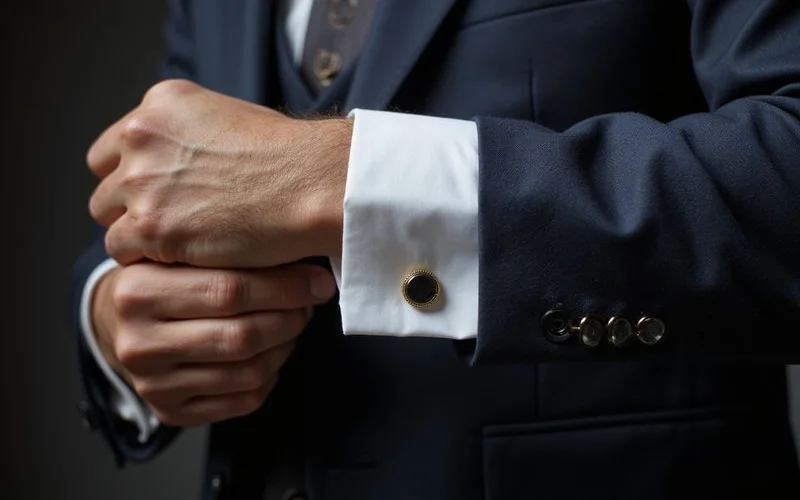
- Width: Enough room to slide easily over your forearm but not billowing. When you bend your arm, you should not see excessive bunching at the elbow.
- Armhole position: High armholes that sit close to the body allow better range of motion. Off-the-rack shirts often drop the armhole low (the “flying squirrel” effect), and the shirt untucks every time you raise your hand.
Zone 6: The Cuffs
- Fit: Snug enough not to slide over your hand when unbuttoned, loose enough to take a watch and move freely on your wrist.
- Watch clearance: If you wear a substantial timepiece, add 1 to 2 cm to the cuff circumference on your watch wrist.
- Length: The cuff should cover your wrist bone and extend about 1 cm beyond the jacket sleeve.
Barrel cuffs (button closure) are the standard for daily business wear in Petaling Jaya. French cuffs requiring cufflinks are dressier and pair beautifully with formal Selangor weddings or evening galas at Le Méridien PJ.
A Local Insight: Why Off-the-Rack Sizing Fails Klang Valley Buyers
Here is something we discuss with almost every new client at our atelier. International size charts assume body proportions drawn from European or American averages. Petaling Jaya office workers tend to be slightly shorter through the torso, with narrower shoulders and longer arms relative to chest width. The result is that a “16/34” off-the-rack shirt fits almost no Klang Valley professional well, even when the neck and sleeve numbers technically match.
Custom shirts solve this by measuring you against your actual body, not an imported template. It is the single biggest reason our custom shirts feel different to clients used to international brands.
Common Fit Problems and What Causes Them
- Collar gap: The collar stands away from your neck. Usually a too-large collar band or a poorly proportioned point length.
- Shoulder divots: Small dimples at the seam. The shoulder seam position is wrong for your build.
- Billowing waist: Excess fabric at the midsection when tucked. Insufficient waist suppression for your drop.
- Cuff too long or short: Off-the-rack sleeves come in fixed lengths. Custom solves this precisely.
- Pulling placket: The button line opens between buttons, especially when seated. The chest or waist is too tight.
Why Custom Shirts Solve These Problems
Off-the-rack shirts are designed to fit as many bodies as possible, which means they fit no one perfectly. A custom shirt at One Tailor takes more than 15 measurements and constructs a garment specifically for your body:
- Collar sized to the quarter centimeter, no more headaches.
- Sleeves cut to length, with adjustments for left and right arm differences.
- Body tapered to your specific drop, no more billowing.
- Shoulder seams positioned exactly on your shoulder bone.
- Armholes placed high so the shirt stays tucked when you reach for your phone.
A Sensible Investment
A custom shirt at One Tailor typically starts around RM450 in our entry-level cottons. More than a department store shirt, less than you might expect. Look at the total cost of ownership. Buying an RM200 shirt and paying for two rounds of alterations often costs nearly as much as going custom from the start, and the result is usually still a compromise.
If you are curious what a properly fitted dress shirt actually feels like, book a consultation at our Petaling Jaya atelier. Daniel and our style team will measure you carefully, walk through cloth options from Thomas Mason and Albini, and show you how much better a shirt can fit when it is built specifically for your body.
Daniel Tan
Expert insights from the One Tailor tailoring team in Petaling Jaya.