How a Suit Should Actually Fit: A Petaling Jaya Gentleman's Checklist
Eight fit checkpoints every PJ professional should know. From shoulders to trouser break, learn what separates a passable fit from a perfect one.
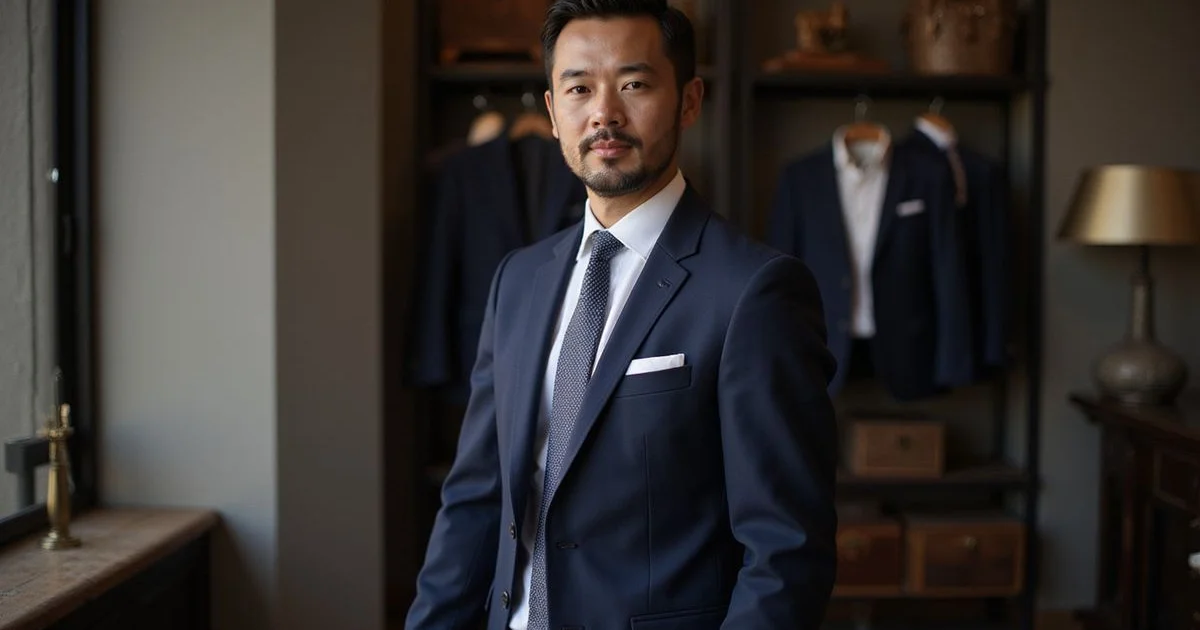
A well-fitting suit changes how you carry yourself, how clients perceive your authority, and, more importantly, how you feel inside the cloth on a long day. After 46 years cutting suits in Petaling Jaya, my team and I have measured tens of thousands of professionals across the Klang Valley, and we still see the same handful of fit problems repeating themselves.
The good news is that fit is learnable. Once you know what to look for, you stop accepting compromises that off-the-rack shops have trained you to ignore.
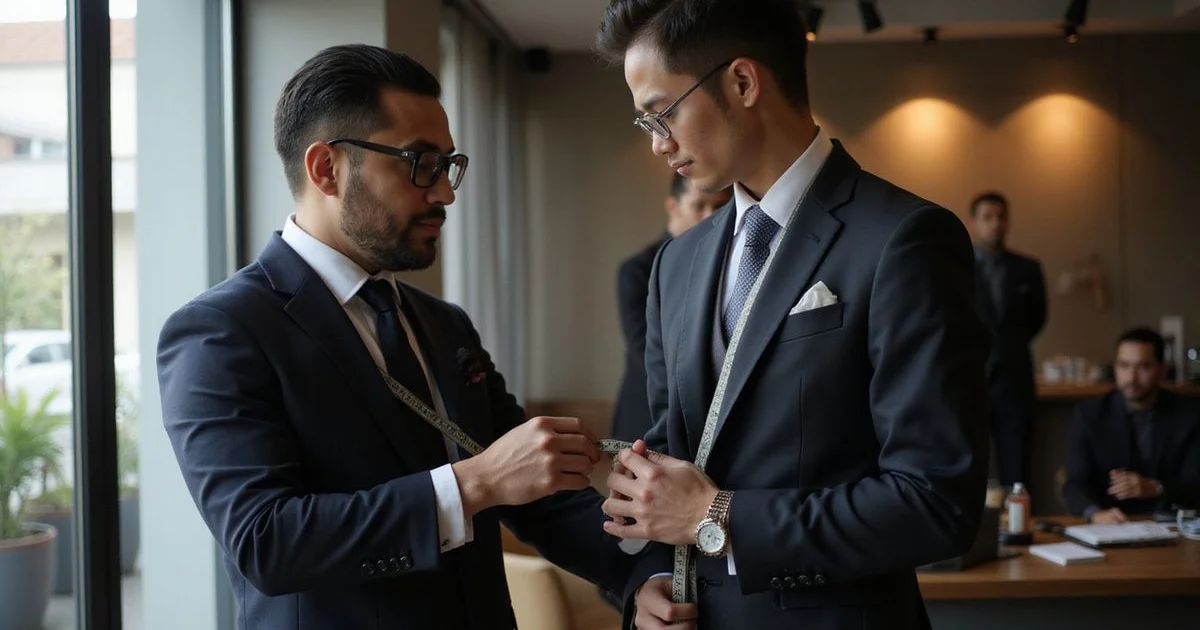
This is the same checklist I walk every new client through during a consultation at One Tailor. Eight checkpoints, in the order I assess them.
A Quick Note on PJ’s Climate Before We Start
The fit standards below apply universally, but our weather adds a wrinkle. A suit that feels “just right” in an air-conditioned showroom can feel restrictive once you walk to your car in 33°C heat. We always advise clients to check their fit standing, sitting, and reaching, not just standing still in a mirror. The best Petaling Jaya cuts allow for the small amount of fabric expansion that humidity creates throughout the day.
Checkpoint 1: The Shoulders
The shoulder is the foundation of jacket fit. Get this wrong and the entire silhouette collapses.
The seam should end exactly where your natural shoulder ends, right at the pivot where your arm begins. A seam that drops past this point makes the jacket look like a hand-me-down. A seam that climbs too high creates a constricted, pinched appearance.
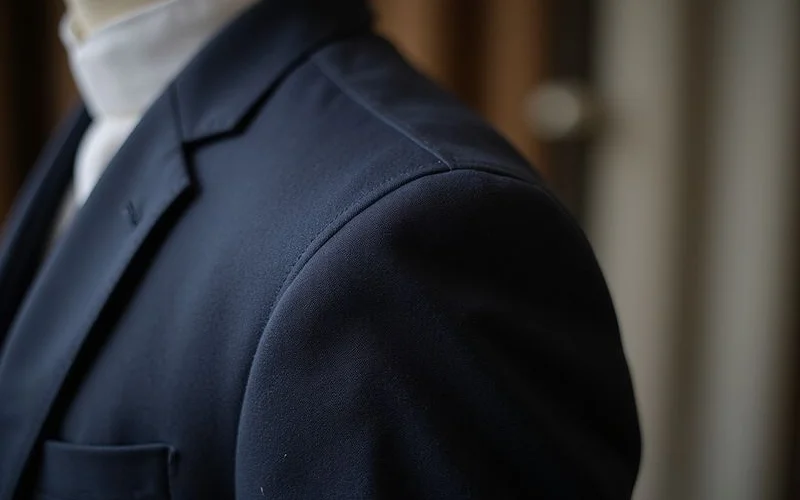
Three things I always check at the shoulder:
- Seam position: Aligned with your natural shoulder bone.
- Lie of the cloth: Smooth and flat between neck and seam, with no ripples.
- Sleeve head drape: No divots, dimples, or creases where the sleeve meets the body.
Shoulder width is one of the only fit areas that is nearly impossible to alter later. Structural changes here mean rebuilding the upper jacket. Always prioritize shoulders when you select a size.
Checkpoint 2: The Collar and Neck
Run a finger along the back of your neck where it meets the jacket collar. The collar should rest gently against your shirt collar, with no gap behind your nape.
A visible space between your neck and the jacket collar is one of the most common defects in off-the-rack tailoring. I would estimate roughly 60% of department store jackets in Selangor suffer from this exact problem, especially among clients who spend long hours hunched over a laptop.
The ideal ratio is to show about 1 cm of shirt collar above the jacket collar all the way around.
Checkpoint 3: The Chest and Torso
When properly fitted, you should be able to slip your flat hand between the buttoned jacket and your chest. Anything more than that, and the jacket is too loose.
Watch for the “X warning sign,” horizontal tension lines radiating from the buttoning point. If you see an X-shaped crease when you button up, the jacket is too tight. Excess fabric hanging loosely means it is too large.
The position of the top button (on a two-button suit) also matters. It should sit roughly one to two centimeters above your navel. A well-placed button stance elongates the torso and balances your overall frame.
Checkpoint 4: The Back
View your jacket from behind in a three-way mirror. You are looking for a clean drape with no horizontal ripples below the collar and no vertical folds near the armholes.
Double vents should lie flat when your arms hang at your sides. If they pull open and reveal your trousers, the jacket is tight through the hips. This is a common issue for clients with athletic builds who train at gyms in Bandar Utama or Mutiara Damansara.
Checkpoint 5: Jacket Length
Classic tailoring puts the jacket hem where your thumb knuckle sits when your arms hang naturally. It should also cover the curvature of your seat.
Shorter cuts have trended in modern Asian tailoring over the past decade, but going too short looks amateurish and exposes the seat. Going too long visually shortens your legs.
Your height and torso ratio matter here. A taller man often needs a slightly longer jacket. A shorter man benefits from a marginally shorter cut to maximize the leg line. There is no single “right” length.
Checkpoint 6: The Sleeves
With your arms hanging naturally, the jacket sleeve should end at your wrist bone. This allows about 1 to 1.5 cm of shirt cuff to show.
The sleeve should taper naturally toward your wrist without gripping. You should be able to shake hands or check your watch without the sleeve riding to your elbow.
Cost of Common Sleeve Adjustments at One Tailor
| Adjustment | Estimated Cost (PJ) | Notes |
|---|---|---|
| Plain Hem | RM80 to RM150 | Simple shortening from the cuff. |
| Working Buttonholes | RM250 to RM400 | Requires shortening from the shoulder. |
| Lengthening | RM100 to RM180 | Limited by available cuff allowance. |
Checkpoint 7: The Trousers
Many men focus entirely on the jacket and ignore the trousers. This creates an unbalanced look that no amount of jacket fitting can fix.
- Waist position: Wear dress trousers at your natural waist, near the navel. This is higher than where casual jeans sit.
- Seat and thigh: The cloth should trace the line of your body without gripping. You need enough room to sit comfortably without fearing a split seam.
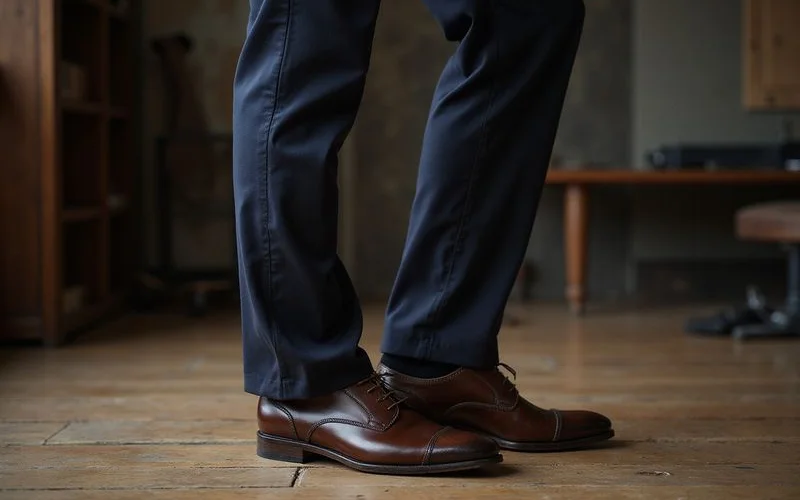
Checkpoint 8: The Break
The “break” describes how much the trouser fabric folds where it meets your shoe.
- No break: The hem barely touches the shoe. A clean, modern look that demands a slim leg opening and confident styling.
- Half break: A slight fold where the hem meets the shoe. The safest and most professional choice for general business wear in Petaling Jaya.
- Full break: A significant fold of fabric resting on the shoe. Traditional, but it can look sloppy if the trousers are even slightly baggy.
For most PJ professionals, a half break wins. It looks sharp in photos, holds up to a long day at the office, and works whether you wear leather oxfords or a more relaxed Derby.
A Local Expert Insight: How PJ Posture Patterns Affect Fit
Here is something we have observed across thousands of fittings at our atelier. Petaling Jaya office workers tend to exhibit specific posture patterns that off-the-rack shops simply do not account for. Years of laptop use create a “forward head” carriage and rounded shoulders. Long commutes on the LDP and Federal Highway encourage a slight pelvic tilt. These small variations completely change how a standard pattern hangs on the body.
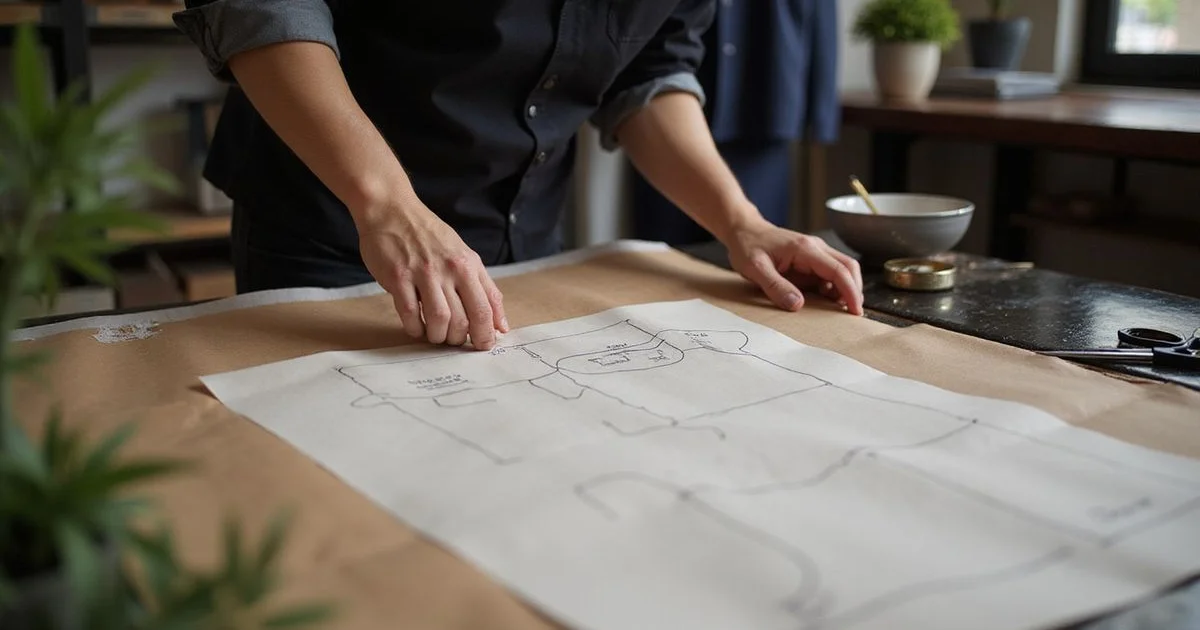
When we draft a paper pattern at One Tailor, we account for these patterns directly. That is why a true bespoke suit fits a Klang Valley executive in a way that an imported template cannot.
When Fit Is Not Working
If your current wardrobe fails these checkpoints, you have three honest paths forward.
Alterations
A skilled tailor can refine an existing garment. Sleeve lengths, waistlines, and trouser hems are all routinely adjustable. Shoulders and overall body length are rarely worth the cost to alter.
Made-to-Measure
This option modifies a standard pattern. You get a noticeably better fit than off-the-rack, and it is a sensible option if your proportions are roughly standard but you want specific cloths or details.
Bespoke
A bespoke suit is built from a completely unique pattern drafted for your body. Every angle, slope, and measurement is accounted for. This is the only way to fully accommodate posture asymmetries or unusual proportions.
The Fit That Becomes Invisible
The ultimate test of a great suit is that you forget you are wearing it. A correct fit removes the physical distractions of tight armholes, slipping waistbands, and biting collars. You button your jacket, glance in the mirror, and see a clean, commanding silhouette with no friction.
That confidence translates directly into how you carry yourself in business meetings, weddings, and everything in between.
If you are ready to elevate your professional image, book a consultation. My team and I will walk you through the same checkpoints above and help you find the precision fit your role demands.
James Wong
Third-generation master tailor with Savile Row training. James brings decades of bespoke craftsmanship to every garment.